



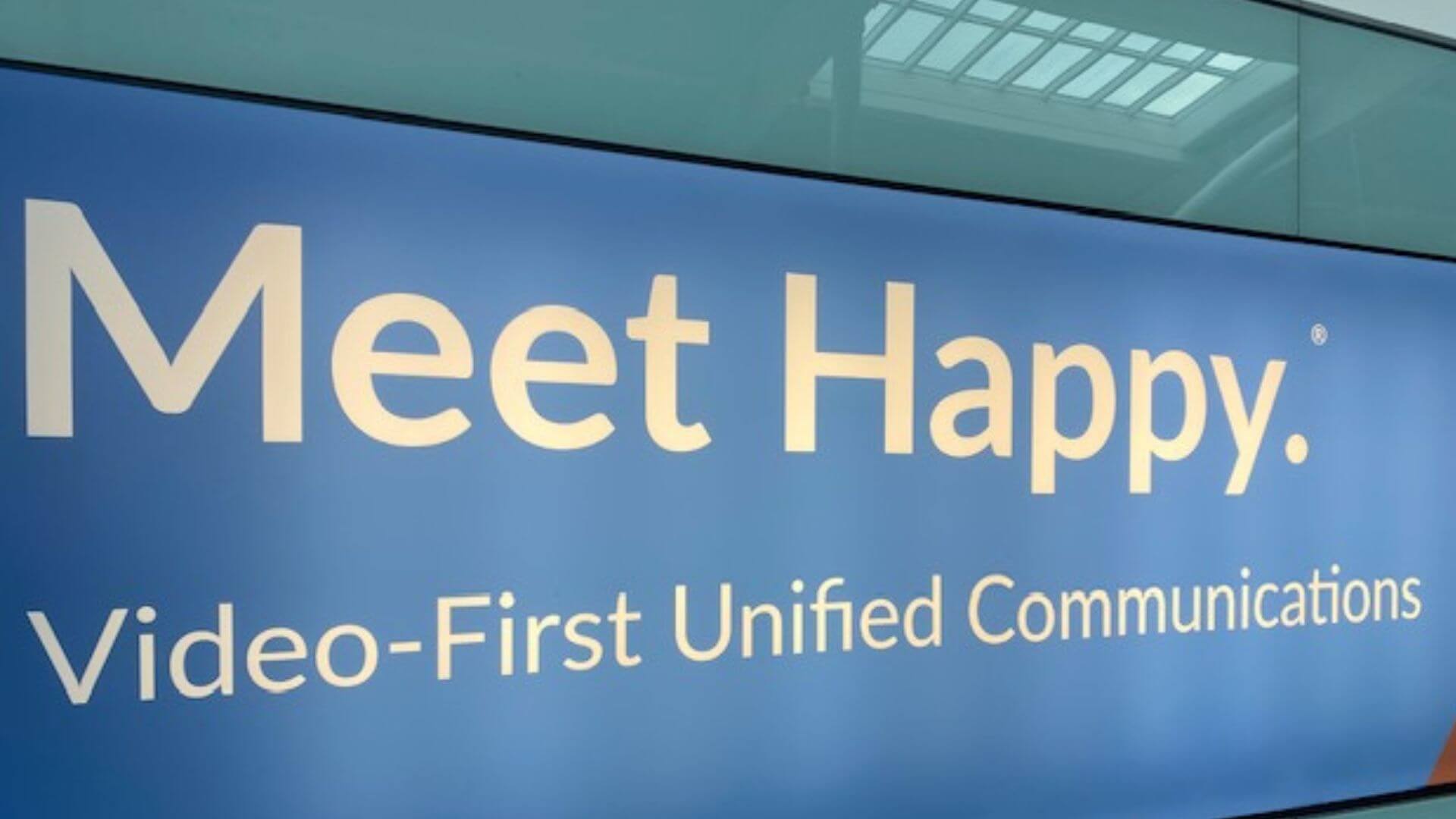
For me, peak advertising anthimeria arrived during this year’s U.S. Open tennis tournament. A commercial for Lexus, with the slogan “Experience amazing,” was immediately followed by one for Deloitte, with its tagline, “Together makes progress.” Later, there was an Edward Jones ad, cajoling us, “Let’s find your rich.” When the actual tennis came on, you could see a sign on the side of the court, promoting the tournament: “Spectacular Awaits.”
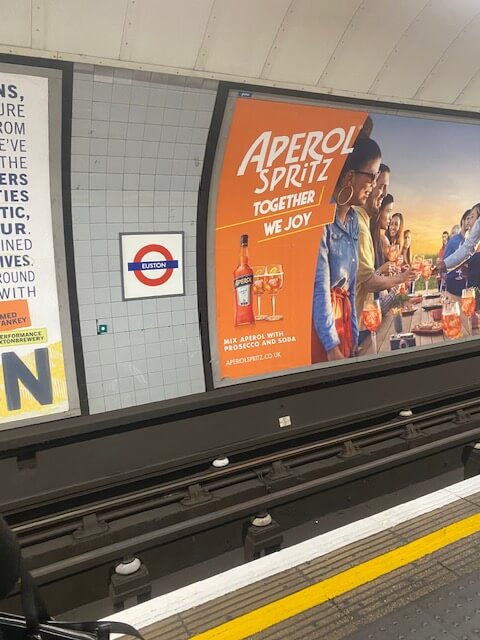 What the slogans had in common was the rhetorical device of anthimeria, also known as functional shifting, which means the use of a word as a different-from-usual part of speech. Thus, Deloitte took the adverb “together,” and the others the adjectives “amazing,” “rich,” and “spectacular,” and turned them into nouns.
The combination was striking but hardly surprising. Anthimeria is, in my observation, the biggest trend in advertising copy in recent years. At this point, it’s almost more surprising to see an ad without it than with it.
In itself, there’s nothing wrong with anthimeria; indeed, it aerates and kick-starts the language. As I described in my book “When You Catch an Adjective, Kill It: The Parts of Speech, for Better and/or for Worse,” in Middle English, the nouns “duke” and “lord” started to be used as verbs, and the verbs “cut” and “rule” shifted to nouns. Shakespeare’s characters coined verbs — for example, saying “season your admiration” and “dog them at the heels” — and coined nouns such as “design,” “scuffle,” and “shudder.” In modern times, we can find noun to adjective (as in S.J. Perelman’s play “The Beauty Part”), adjective to noun (as in the Wicked Witch’s “I’ll get you, my pretty”), adverb to verb (as in to “down” a drink), and noun to verb. (In the movie “The Martian,” Matt Damon memorably says, “I’m gonna have to science the shit out of this.”
The device is especially productive in slang. Impressively, “chill” went from noun (“winter chill”) to transitive verb (“chill the wine”) to intransitive verb (“Netflix and chill”) to adjective, as in, “That party was chill.” (And Coors Lite re-nouns the word — I think — in its slogan “Choose chill.”) The process has appeared to speed up of late. “Cringe,” “genius,” and “cliché” have lately become adjectives, and “heart” a verb, and “feels,” “fail,” and “cope” nouns (as the New York Times explained recently).
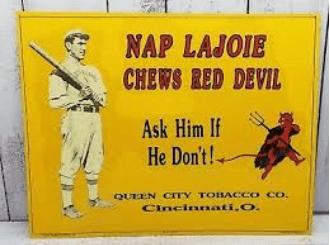
Advertising, if nothing else, needs to make you pay attention, and bad or non-standard grammar is one of the ways it has traditionally done this. I’ve always loved this early-twentieth-century endorsement by a star ballplayer. It reads, “Nap LaJoie chews Red Devil. Ask Him If He Don’t!”
Later, there were grammatically questionable slogans such as “Winston tastes good like a cigarette should”; “Us Tarreyton smokers would rather fight than switch”; “Think different” (from Apple); “Leggo my Eggo”; and “Make summer funner” (from Target).
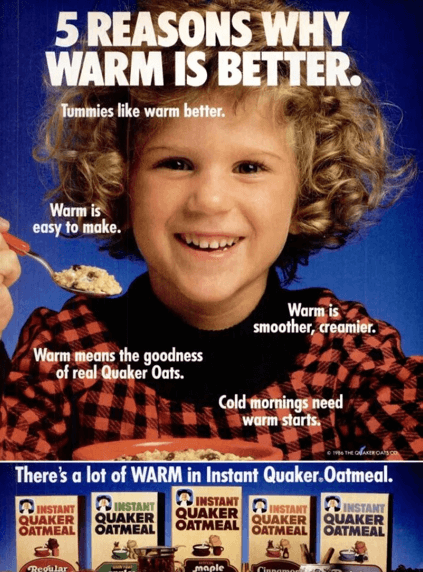
The earliest anthimeria ad I’m aware of was Quaker Oatmeal’s ad in 1986 that transformed the adjective “warm” into a noun. It read, “5 reasons why warm is better. Tummies like warm better. Warm is easy to make.” And so on.
In 2011, blogger Nancy Friedman spotted Ben & Jerry’s “Committed to Great” and “Full of wow” (an interjection to a noun), from Crystal, a California dairy. Two years later came the line “Tonight We Tanqueray”; two years after that, in 2015, when I saw a sign in a store commanding “bring the merry home,” I had a sense that the trend had taken off to the extent that I should document it. I took a picture and threw it into my Notes app, and since then have accumulated well over sixty examples.
The most common category is adjective-to-noun, as in
- “Create exuberant, Live vivid,” from Jaguar
- “Good leads the way,” from United Airlines
- “Committed to better,” from Leesa
- “Where there’s happy, there has to be Heinz.”
- “Spread the happy,” from Nutella
- “Ace, where helpful has a home.”
- “Healthier starts here,” from New Jersey health insurance
- “Your everyday can pay for your holiday,” from British Air
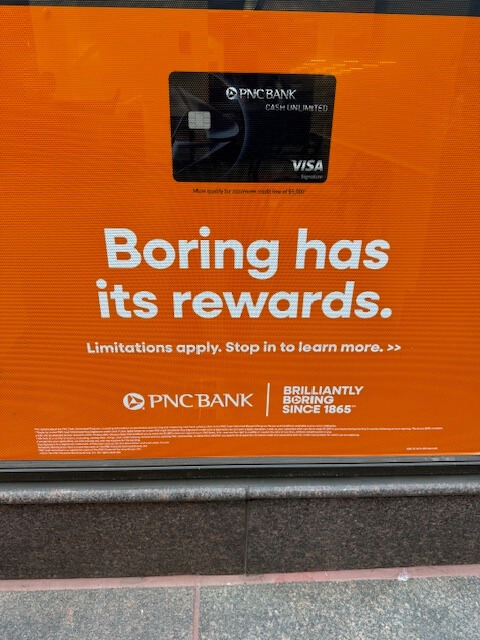
- “Boring has its rewards,” from PNC Bank
Only slightly less popular is noun-to-verb:
- “Let dogs dog,” from Good n fun
- “No matter how hard you football, it’s easy to Sunday,” from Bud Light
- “That’s how you Heisman,” from Nissan
- “Let’s movie,” from TCM
- “It’s easy to Geico.”
- “Google, the new way to cloud.”
- “The Colonel lived so we could chicken,” from KFC
Just a couple of weeks ago, the insurance company Geico did it again with “It feels good to Geico.”
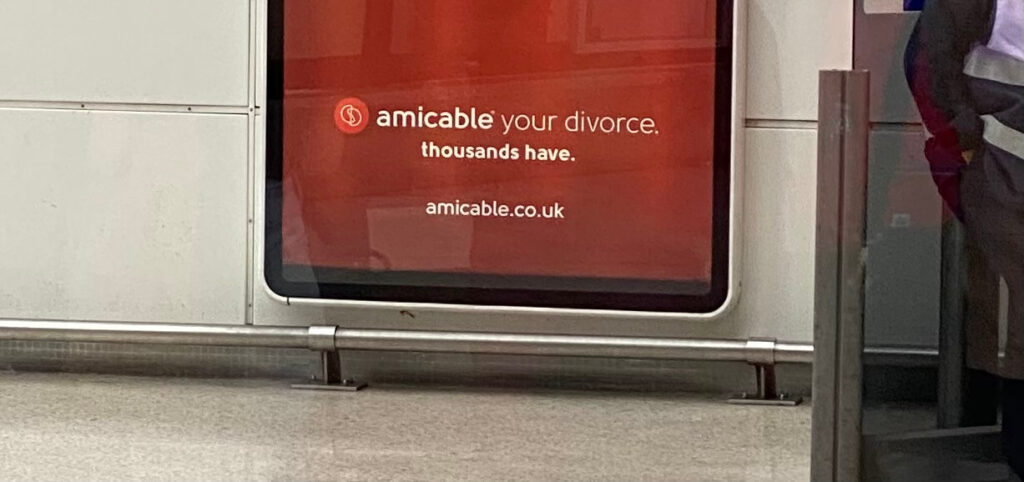
But (with the exception of prepositions, articles, and conjunctions), I’ve clocked examples of all the parts of speech shape-shifting, including one rare adjective-to-verb (“Amicable Your Divorce”) and some I’m not sure I can categorize, such as Pfizer’s “Outdo yesterday,” IHG Hotels’ “Guest how you guest, extra how you extra,” and “The more you Bosch, the more you feel like a Bosch.”
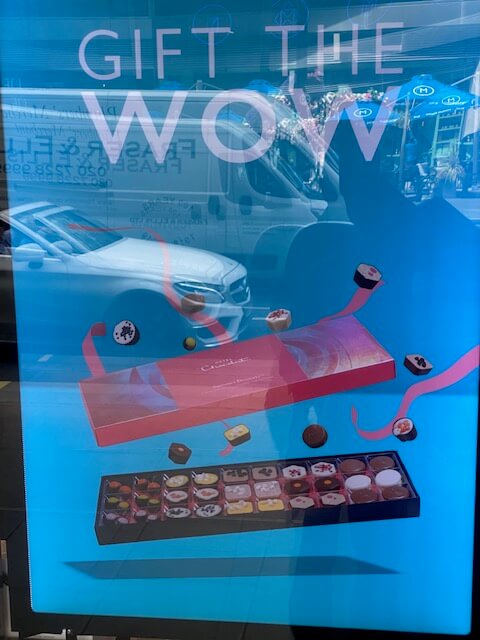
Maybe inevitably, there’s been double-dipping, like “Extraordinary happens here” (used by both Cooper Health and the College of Charleston) and “Make more happen” (from both Safeco and Staples). “Give the Gift of Wow” has been a slogan for a window-box company, the Fernbank Museum, BB Riverboats, and the AREA15 entertainment district in Las Vegas. And speaking of “wow,” Hotel Chocolat’s “Gift the Wow,” with its use of “gift” as a verb, is double anthimeria.
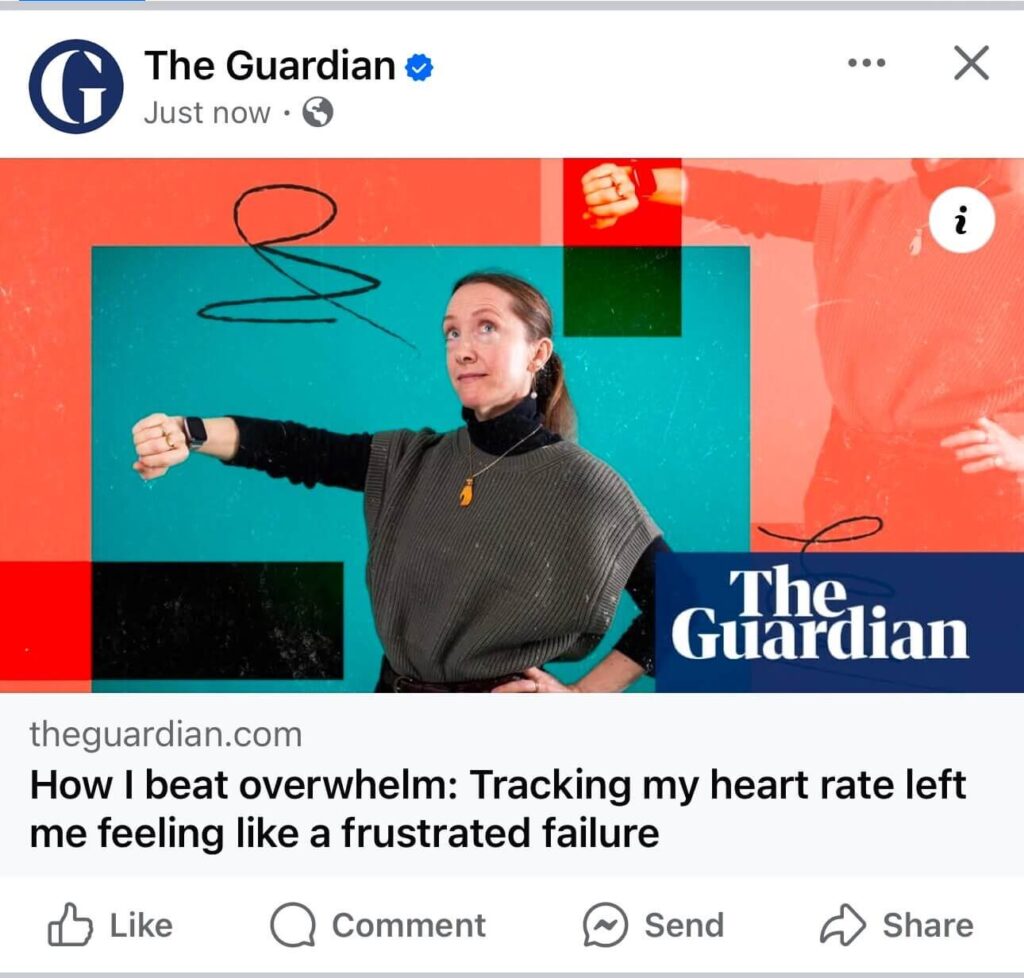
In the last couple of years, I’ve noticed the gimmick moving beyond advertising. The Guardian recently ran an article called “How I Beat Overwhelm.”
A StubHub competitor calls itself TicketSmarter, and there have been books titled “How to Money” and “How to Winter.”

A chain of airport spas is called “Be Relax.”

The first indication I’ve seen that this trend may have finally played itself out was a recent ad for Universal Orlando. The tagline was “A new way to vacation.” It’s such a bland line — an utter no-no in advertising — that I imagined that the copywriter was trying to anthimeria the noun “vacation” but forgot it has already been established as a verb.
I hope my hunch was right. Anthimeria advertising has had a good run (verb to noun). But at this point, the gimmick is cliché and very bore. Please make it over.
All images courtesy of Ben Yagoda.